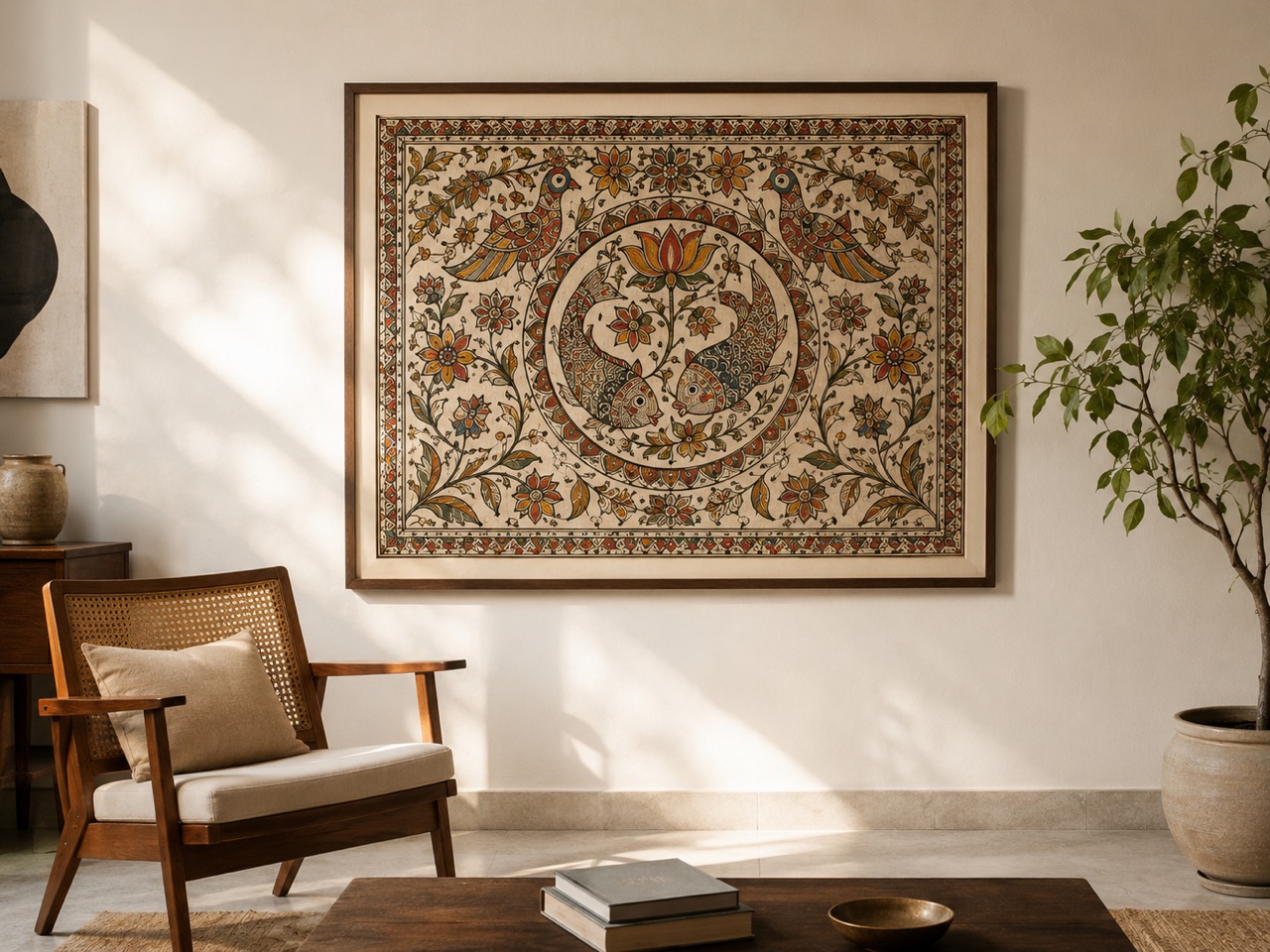
मिथिला की दीवार पर लिखी हुई कहानी
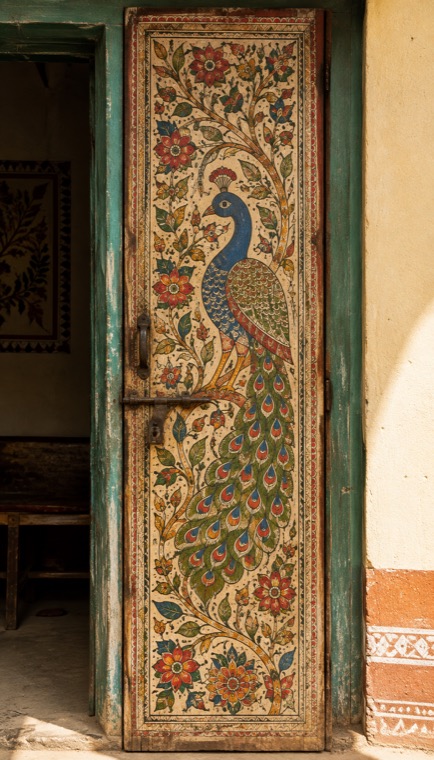
A working painting house in Madhubani. Six women, four generations of hands, and a line that has not been allowed to break since anyone can remember.
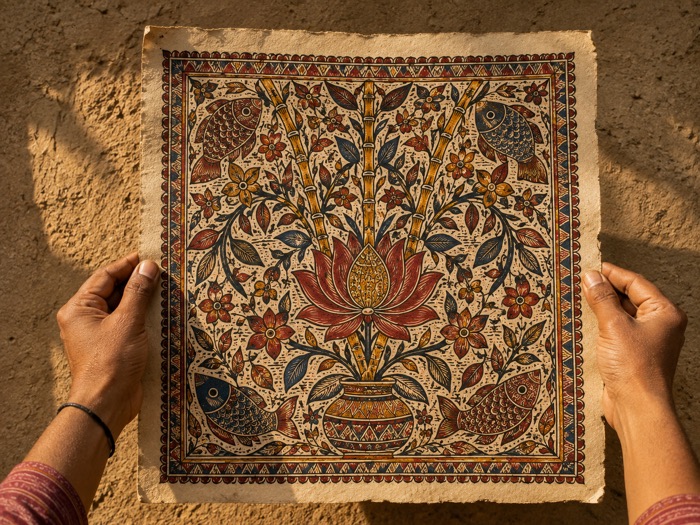
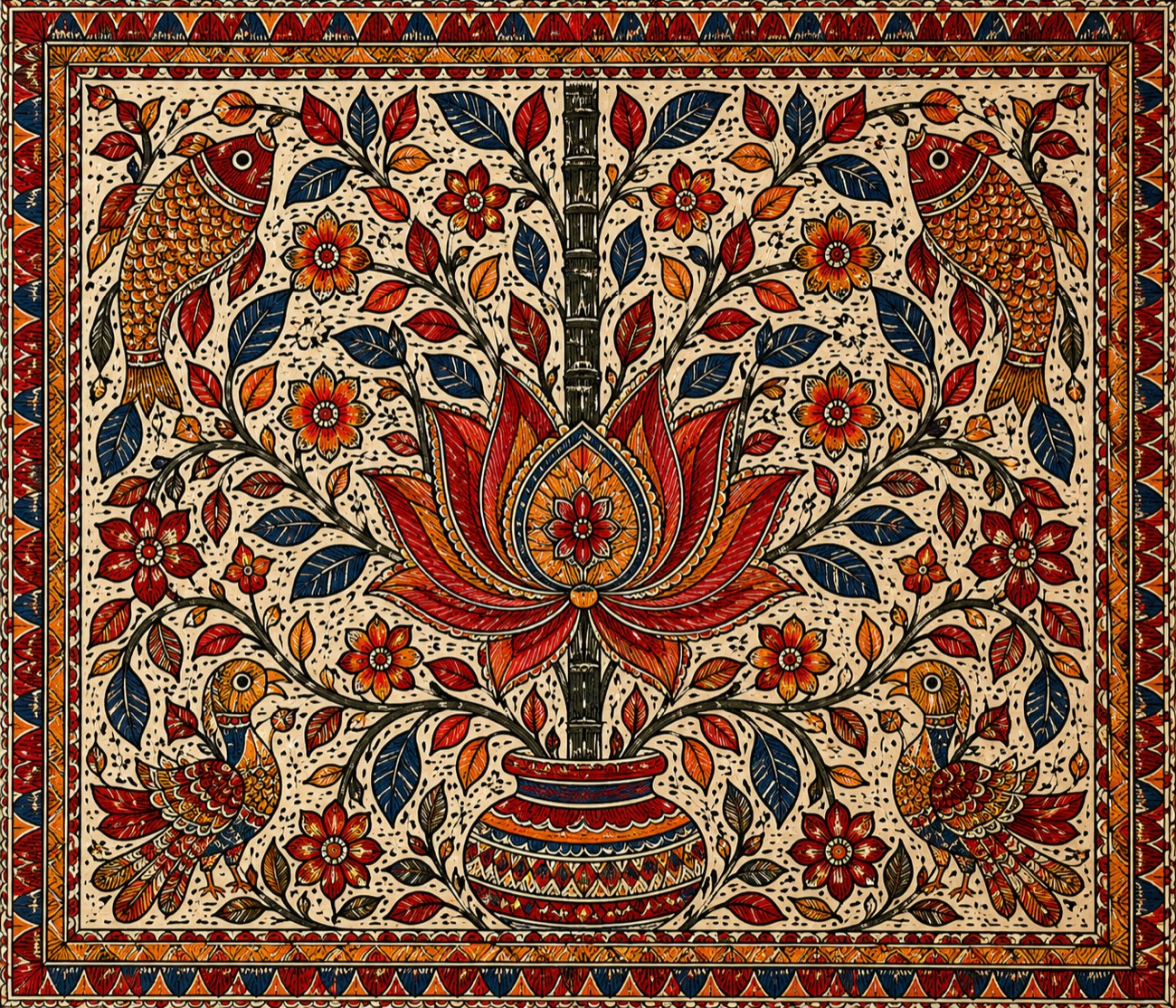
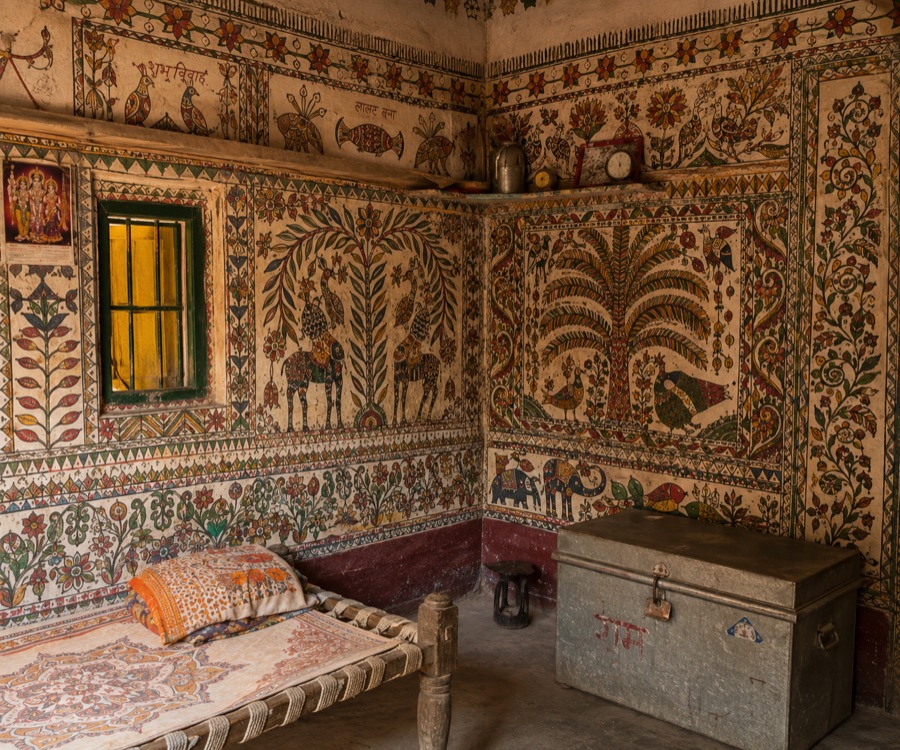
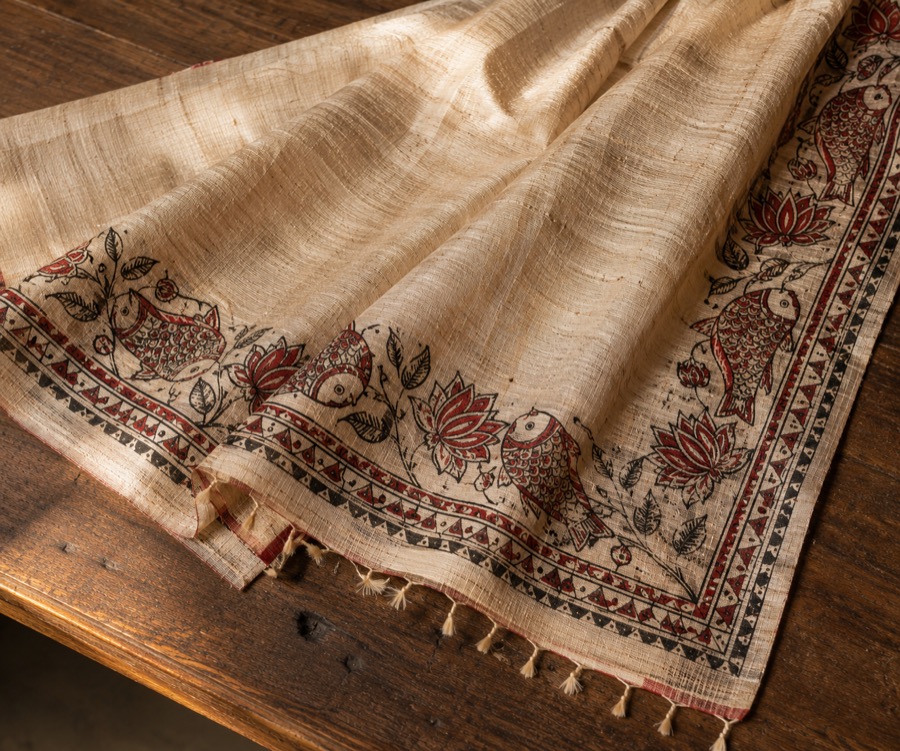
A kohbar is not decoration. It is the room a bride is walked into, painted the night before with lotus, bamboo and fish, so that the walls have already said everything nobody will say out loud.
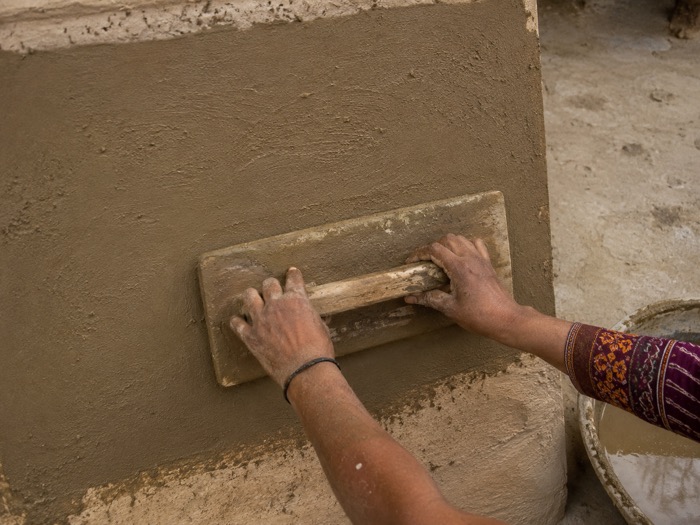
Mud, cow dung and rice husk, layered on the wall and left to breathe for a day. On paper it is handmade Nepali stock, rubbed flat with a river stone. Nothing is painted on a surface that has not been prepared by hand.

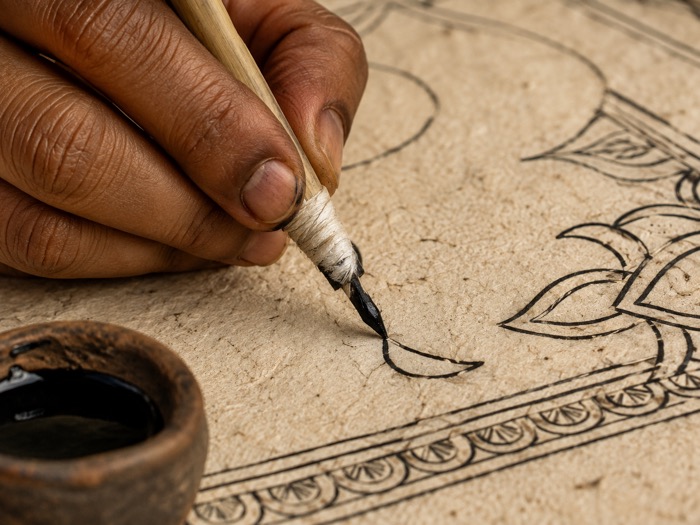
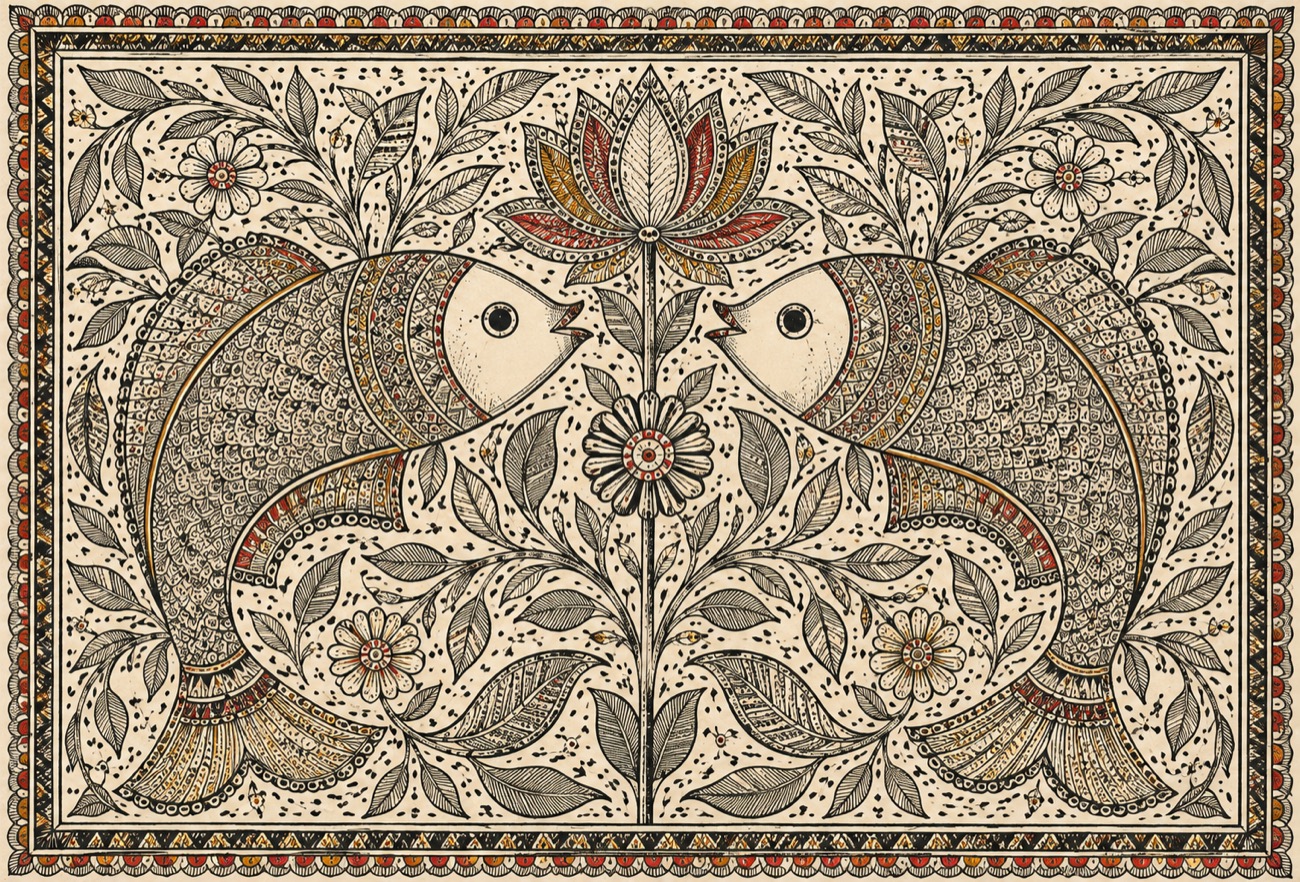
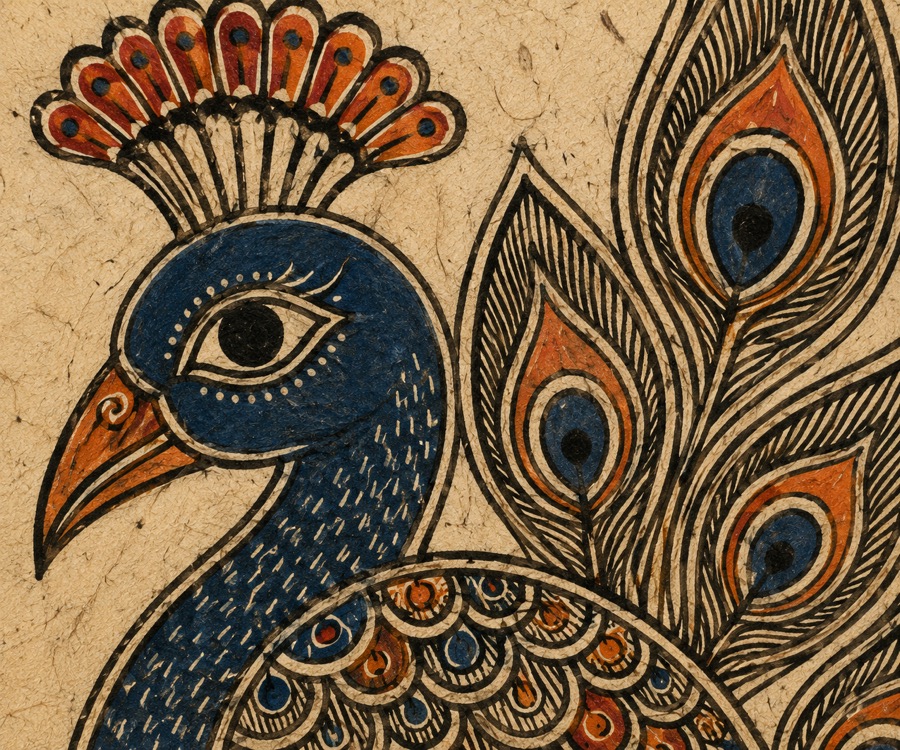
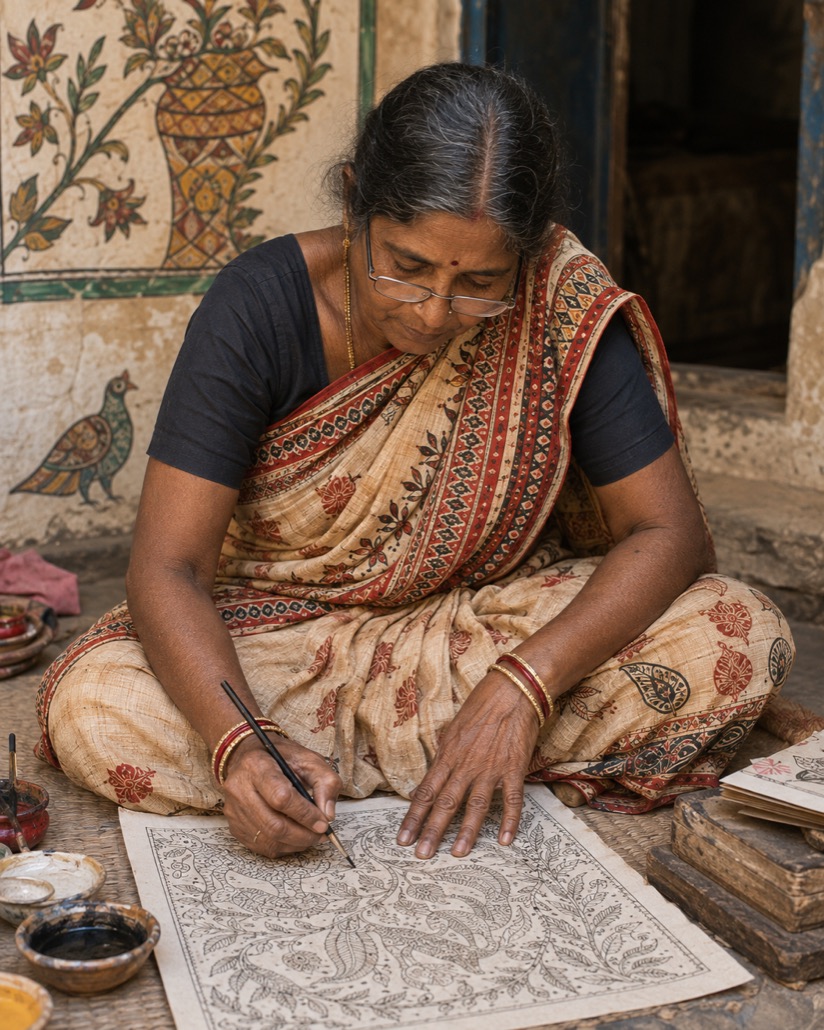
A bamboo twig wrapped in cotton, dipped in soot black. The outline goes down in one pass, twice over, so every figure carries the double line that tells you this came from Mithila and nowhere else. There is no pencil stage. There is no undo.

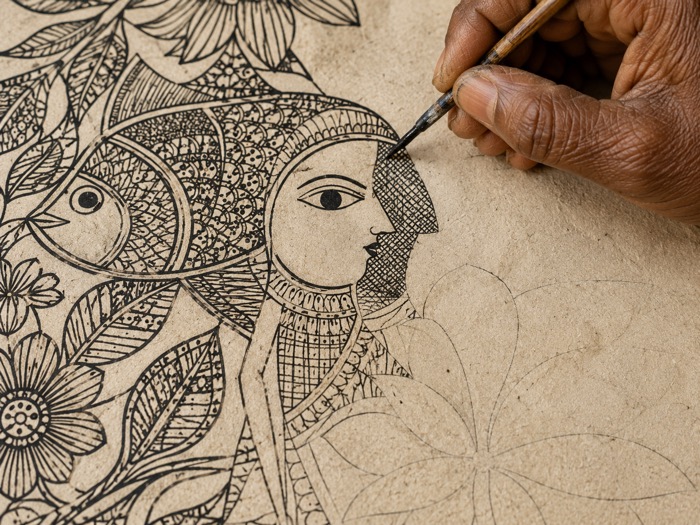
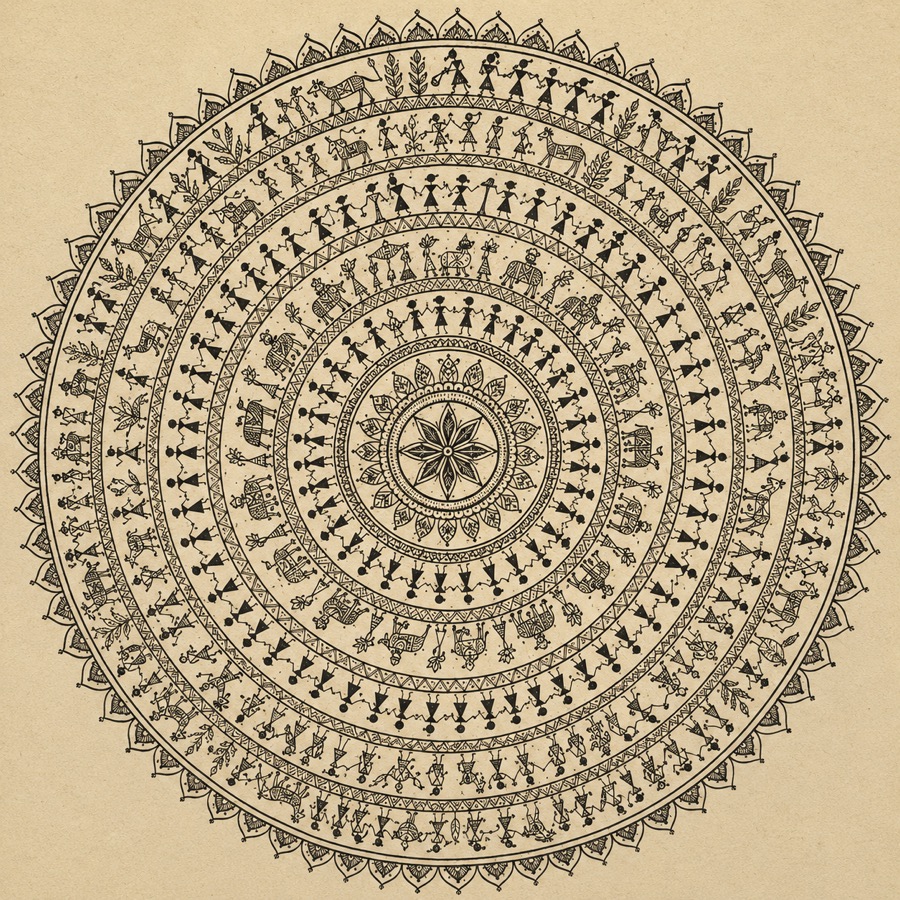
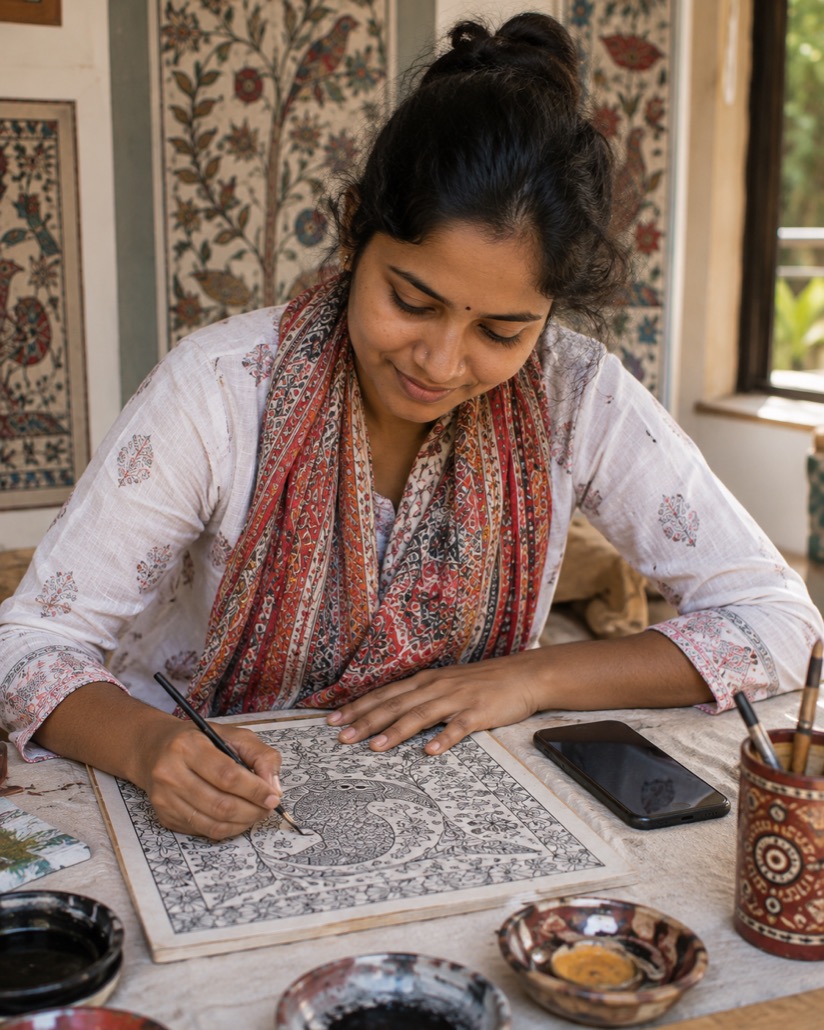
Every empty space is closed with hatching, dots and tiny repeats, because in this grammar emptiness is unfinished. A single square foot can take a full day. This is the part that tourists photograph and buyers underpay for.

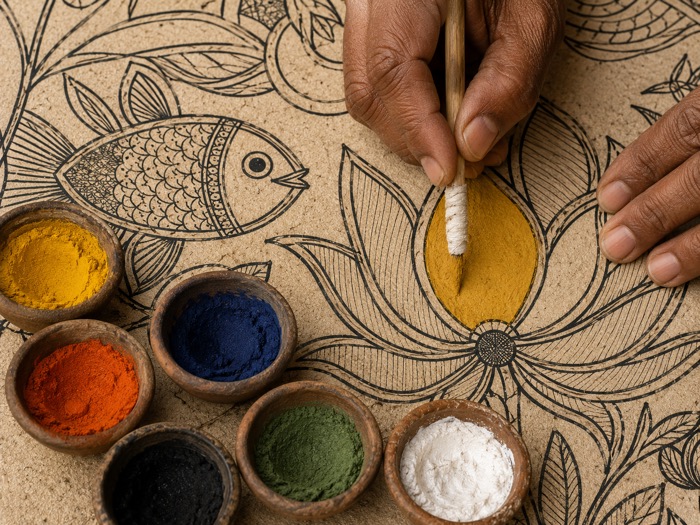
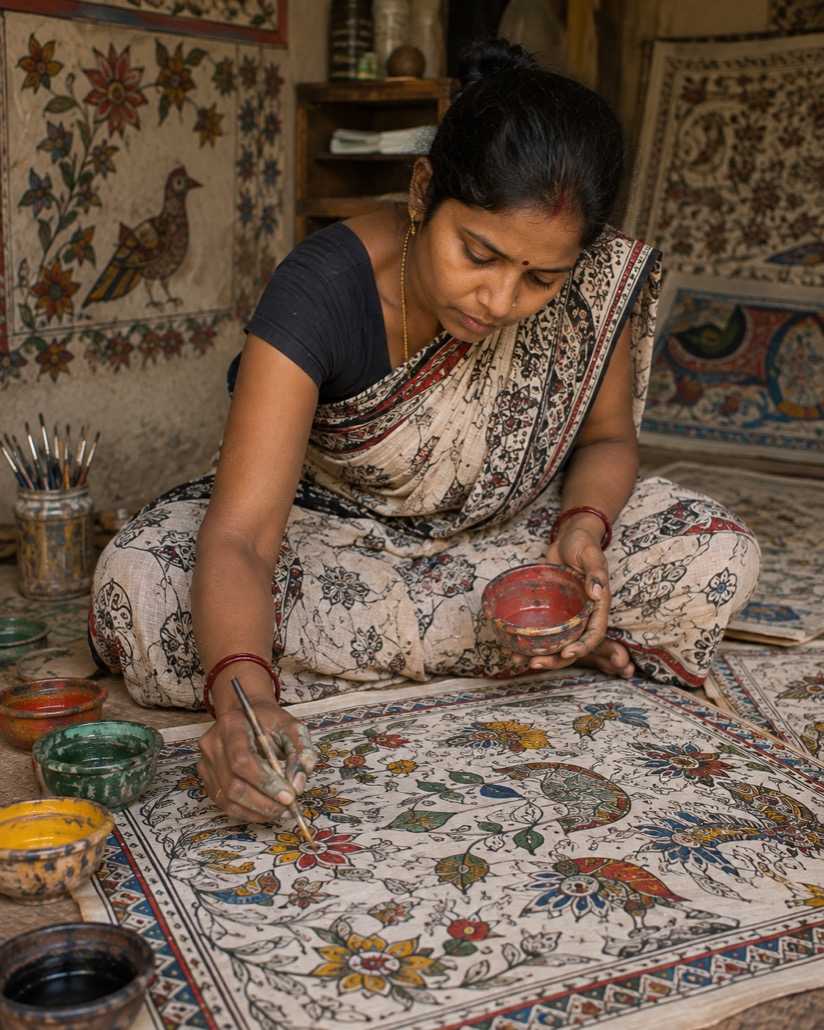
Turmeric for yellow, palash flower for orange, indigo soaked overnight, lamp soot for black, all bound in babul gum. The colour is laid flat, never shaded, and it is laid inside the line, never across it.

Lotus at the centre for the bride, bamboo rising through it for the groom, fish in the corners so the house never runs short. Eleven days of work, signed on the back in Maithili, and then it belongs to a room and not to us.
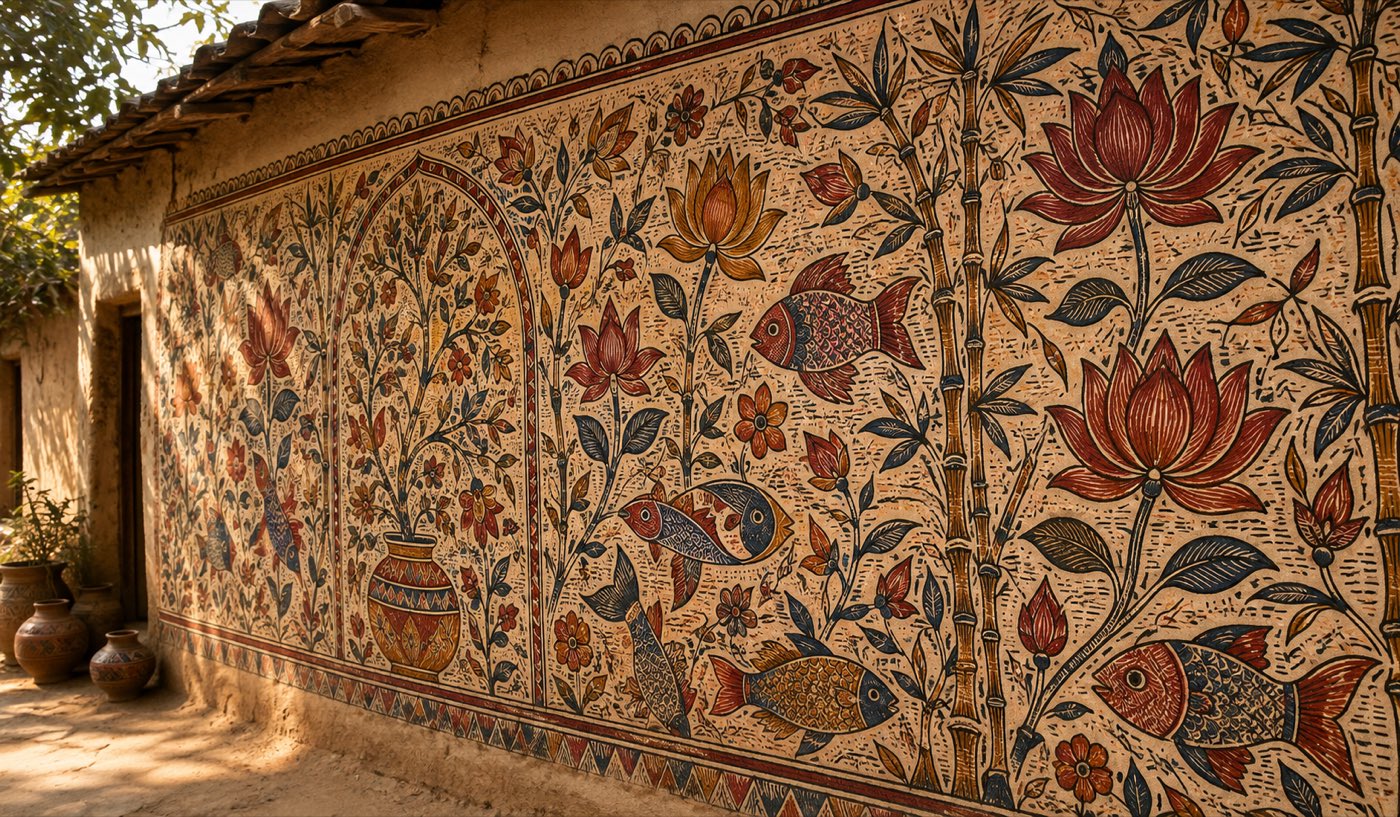
Six figures that appear in almost every wall in the district, and the thing each one is actually saying. Hover any of them to watch the line rebuild itself.

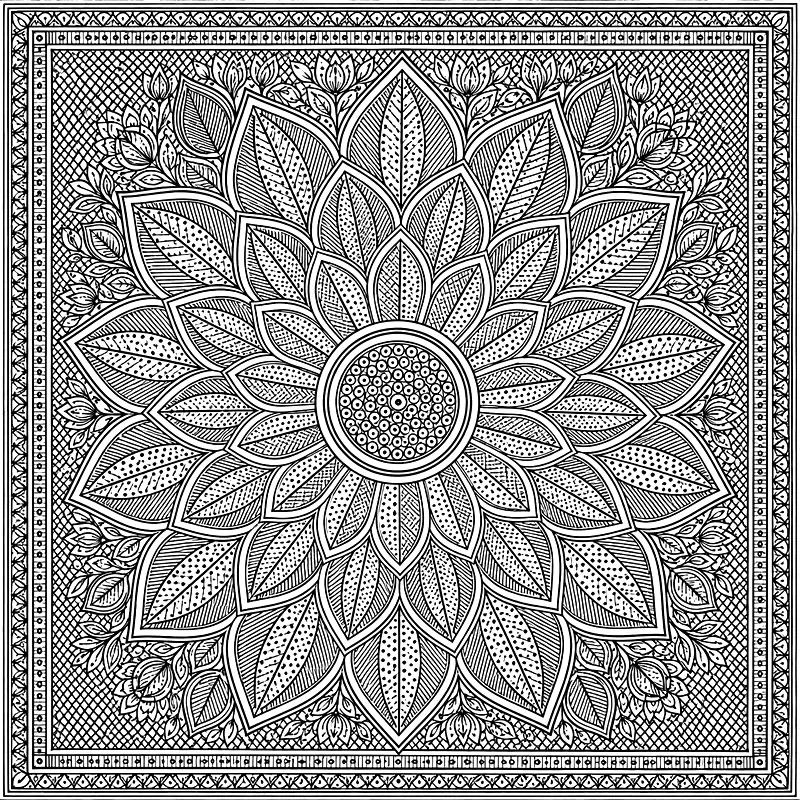
The bride. Drawn open, never in bud, and always at the centre of the kohbar where the eye lands first.

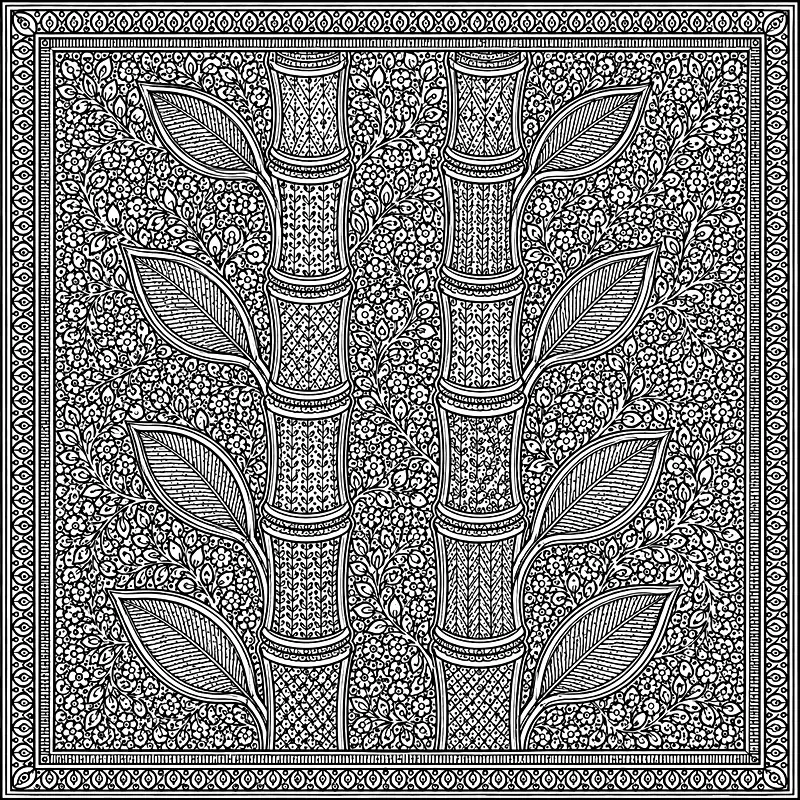
The groom, and the family line. It is drawn rising through the lotus, jointed, because a lineage is counted in segments.

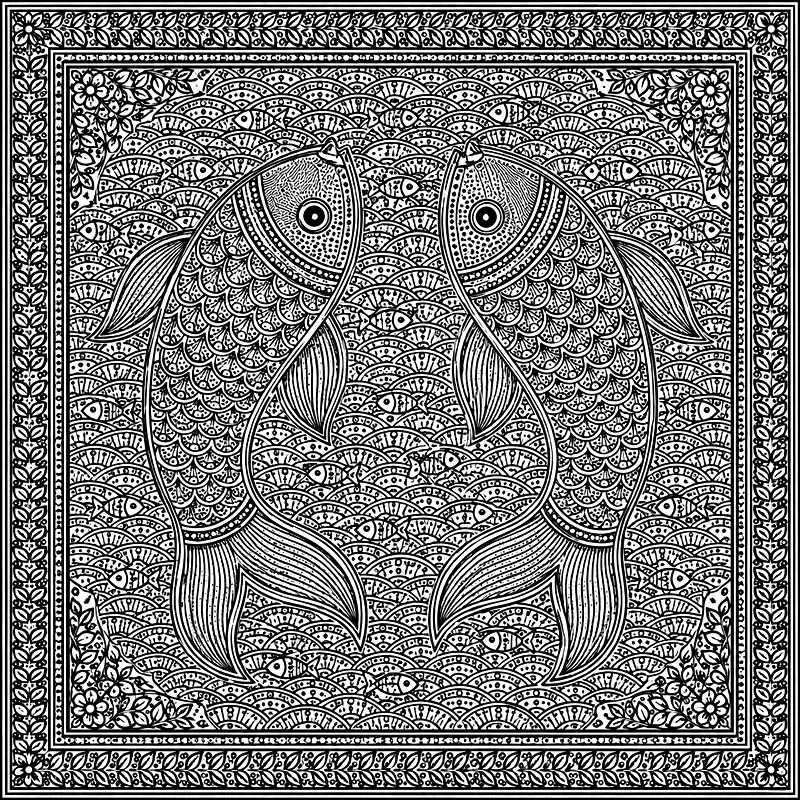
Plenty, and the good eye. Painted in pairs at the corners so that whatever the year does, the pond stays full.

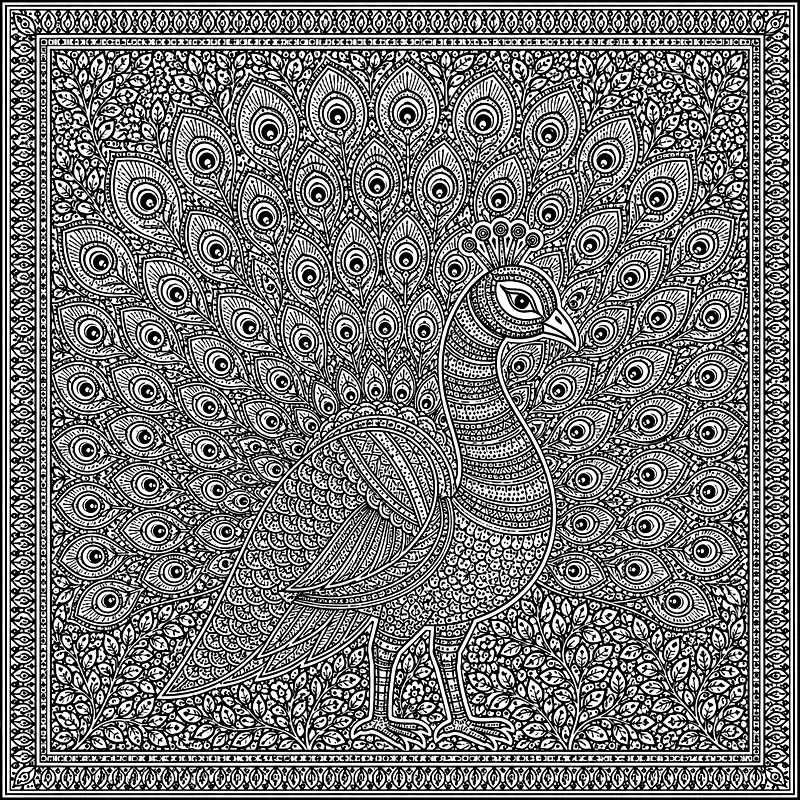
Longing, and the monsoon that ends it. The one figure allowed to be vain, and the reason the palette needs indigo.

Witnesses. Put in the upper corners so the marriage is recorded by something older than the family.

The message carrier. Traditionally the only figure permitted to face out of the frame, at the reader.


The house has never used an acrylic. Everything below is ground, soaked or burnt in the courtyard, bound with babul gum, and mixed the morning it is used.
Every piece leaves with the name of the person who drew it, the village it was drawn in, and the number of days it took. Nothing in this house is finished by a second pair of hands.

Draws the outline for every commission over 24 inches. Learned on a courtyard wall at nine, has never used a pencil.

Runs the pigment yard. The only person allowed to decide when the indigo is ready, which she does by smell.

The fastest hatching in the house, and the one arguing that a kohbar can be 6 feet wide and still be a kohbar.
Most of what leaves here now goes into houses, not galleries: a dining wall in Patna, a hotel lobby in Delhi, a wedding backdrop that gets rolled up and kept. We work to the wall, not to a catalogue.

रेखा आज भी नहीं टूटी है