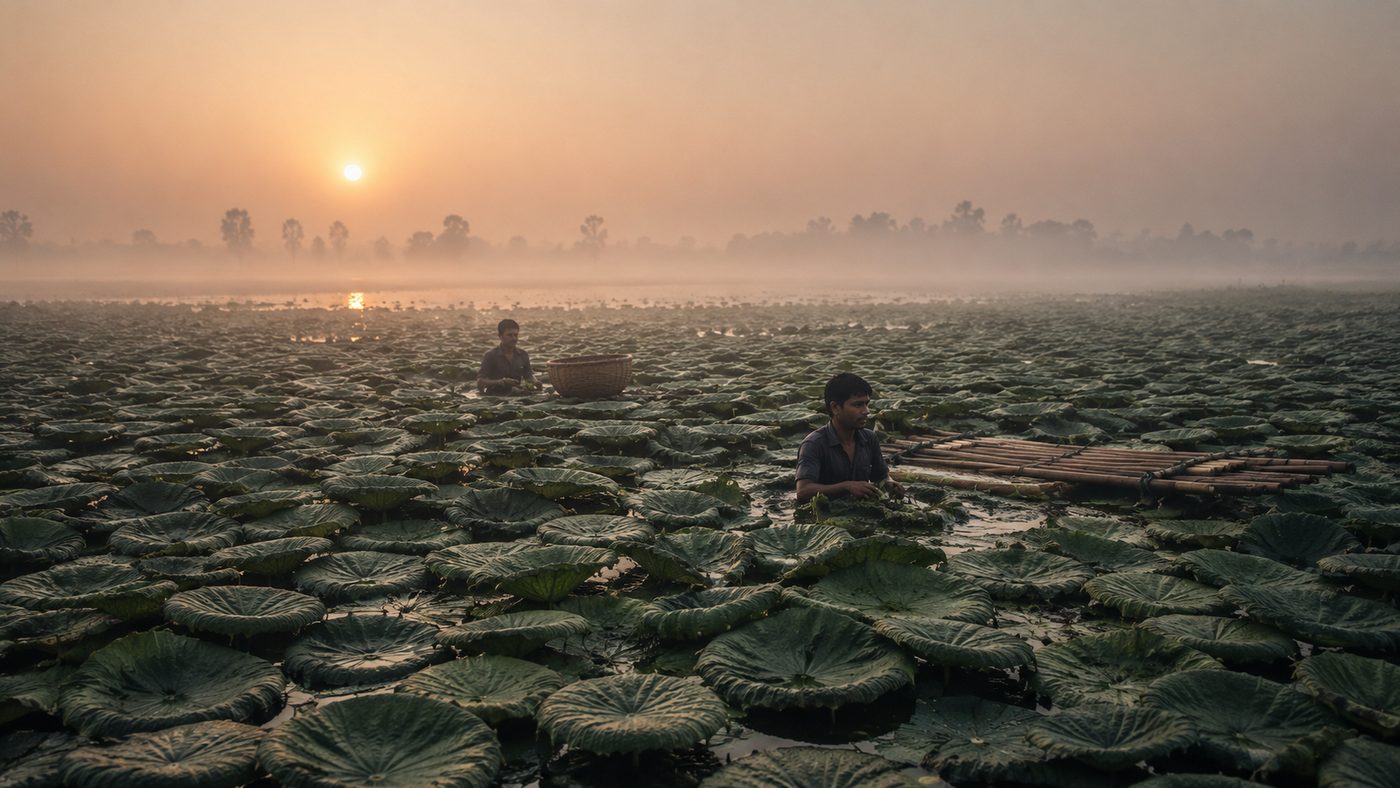
Grown underwater. Finished in fire.
मिथिला का मखाना, तालाब से डिब्बे तक
Fox nut from the still ponds of Darbhanga and Madhubani, harvested by hand from eight feet of water, and roasted the same week it is lifted.
मिथिला का मखाना, तालाब से डिब्बे तक
Fox nut from the still ponds of Darbhanga and Madhubani, harvested by hand from eight feet of water, and roasted the same week it is lifted.
Nine tenths of the world's makhana comes out of ponds you have never heard of, is lifted by divers nobody photographs, and reaches you with somebody else's name on the packet.
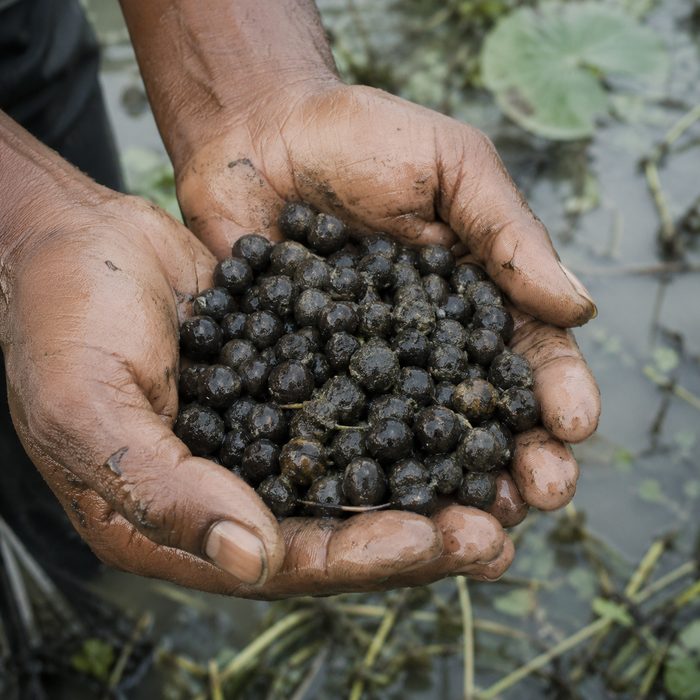
Seed is broadcast into eight feet of standing water in December and sinks to a bed of soft silt. Nothing is visible from the bank for eleven weeks. The pond looks empty, and it is not.
One shoot per seed pushes up through the column. It is thorned along its whole length, which is the first reason this crop is harvested by hand and not by machine.
Leaves unfold flat on the surface, up to a metre across, quilted and spined on the underside. By April a pond is a closed green floor you could mistake for solid ground.
The flower opens above the water, holds for barely two days, and closes back under. Almost nobody outside the villages has seen it, which is why no packet ever puts it on the front.
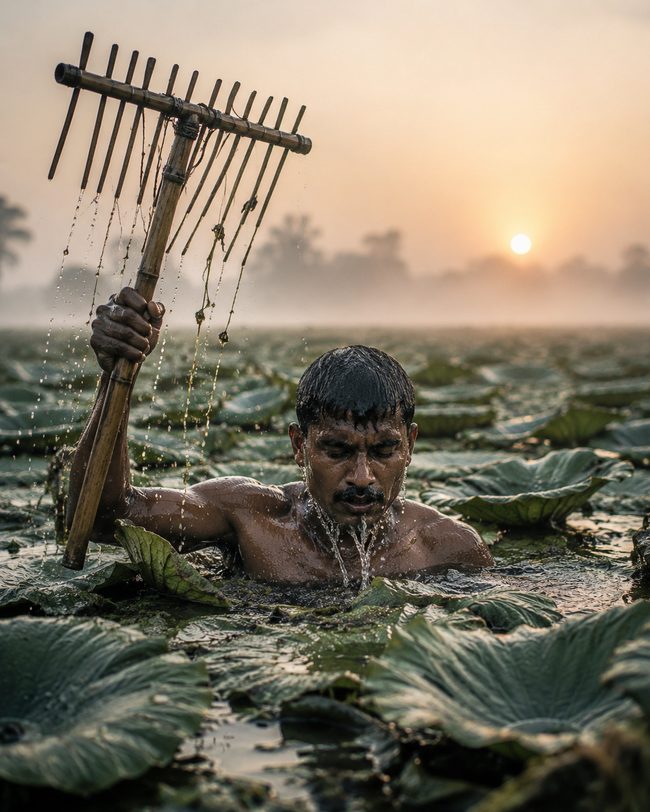
A spiked fruit forms, bursts, and drops the seed back to the bed where it waits. Divers go down for it in July with nothing but a bamboo rake, and come up with the year's crop.
A diver goes under for forty seconds at a time, rakes the bed by feel, and surfaces with a handful. It takes about seventy dives to fill one basket, and a good day is six baskets. Every kilogram you buy was found by somebody's fingers in the dark.
We buy at the pond, in cash, on the day. There is no commission agent between the diver and this brand, which is the only part of the supply chain we have actually managed to change.
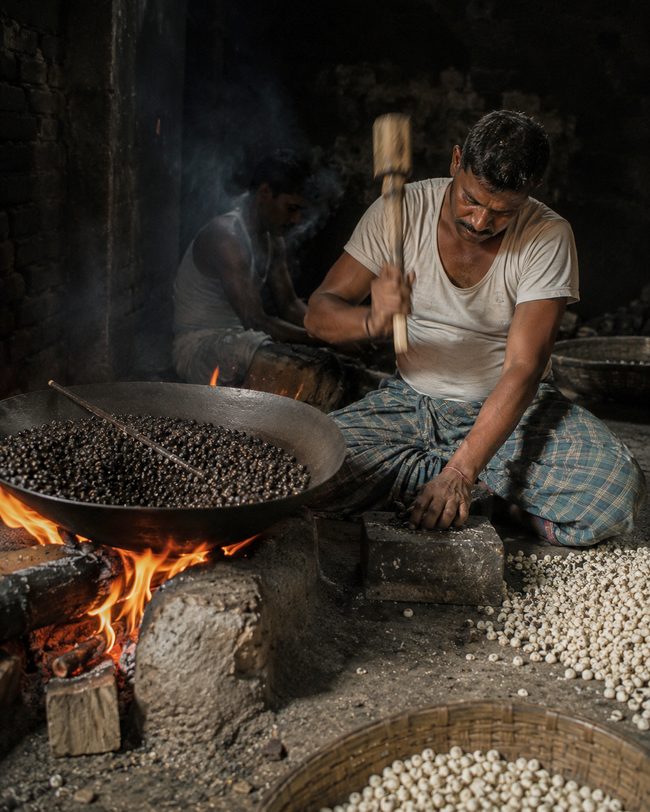
The black seed is tempered, rested for three days, then thrown into a pan at around 290 degrees. It is struck once with a wooden mallet and the white kernel bursts clean out of its shell. The whole thing takes about six seconds and cannot be taught in less than a season.
A popper who mistimes the strike gets broken pieces, which sell for roughly half. Every full white nut in a Sarovar packet is somebody's timing, not a machine's.
Makhana is sorted by hand through sieves and sold in "sut". Bigger pops fetch more, break less and puff whiter. Pick a grade to see the specification.
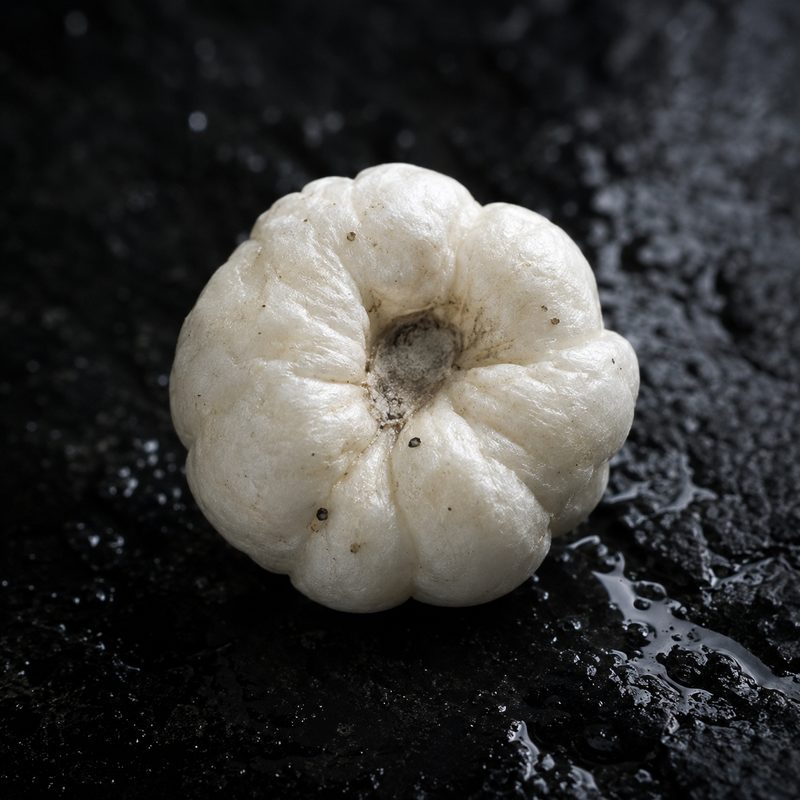
The working grade. Even, round, and what most kitchens actually want. This is the size that goes into roasted snack packs and into most of what leaves Bihar by road.
Standing terms for wholesale and export buyers. Everything below is per lot, and every lot carries the pond it came out of.
Rates move with the season and the pond. Ask the trade desk for a current list against your grade and volume.
Sarovar is a brand concept built to demonstrate a real trading site. The certification marks above name the schemes a working Bihar makhana exporter operates under; no licence numbers are shown because this is not a registered business.
Fox nut went from a festival food to an export line because the numbers happen to suit how the world eats now. These are indicative values per 100 g of plain popped makhana.
Values are indicative and vary by grade, pond and season. Nothing on this page is a health claim.
Raked off the bed in Kamtaul, weighed at the bank, paid for in cash the same hour.
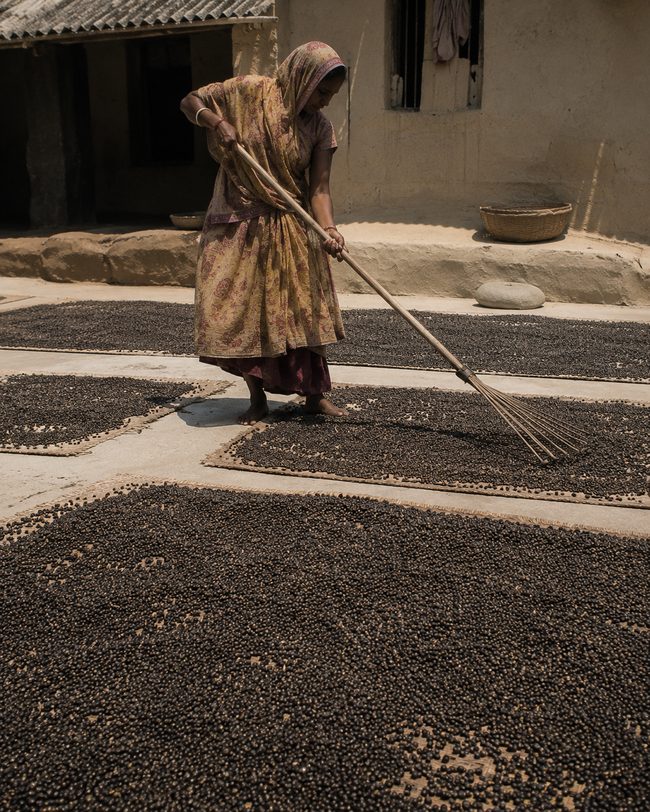
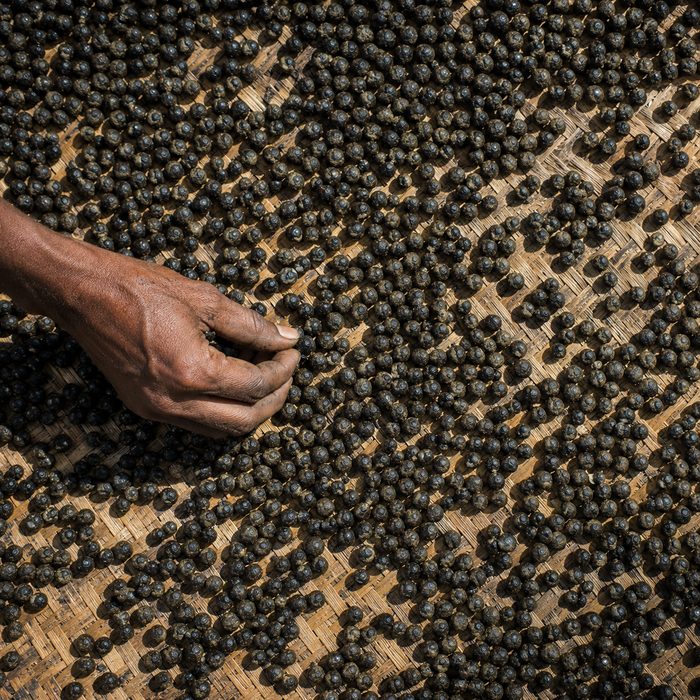
Spread thin on mats, turned four times a day, until the shell rattles and the moisture is out.
Graded by sieve, heated, rested three days, then popped in one pass by hand.
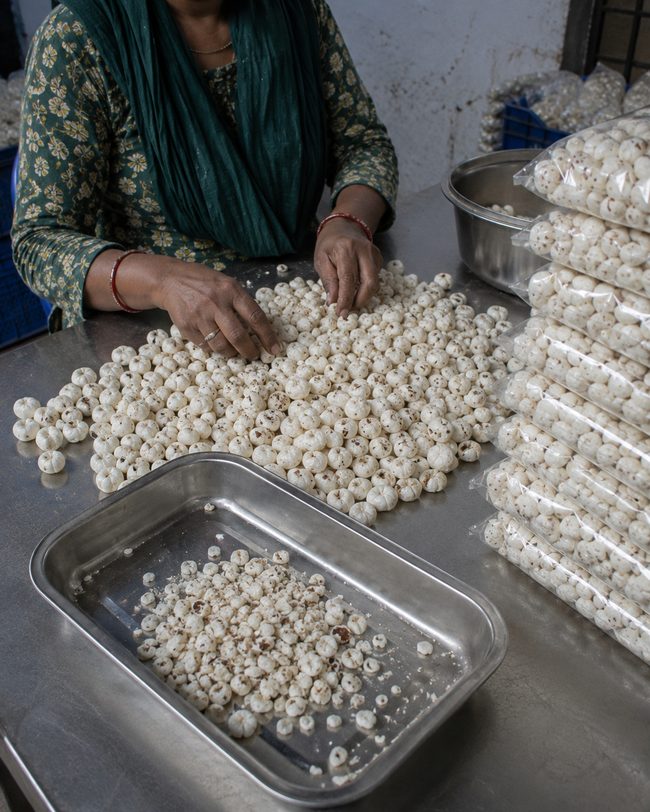
Hand sorted for broken pieces, nitrogen flushed, stamped with the pond it came from.
Sarovar is not a factory that buys makhana. It is eleven families who already owned the ponds, and one shared roasting floor in Darbhanga.
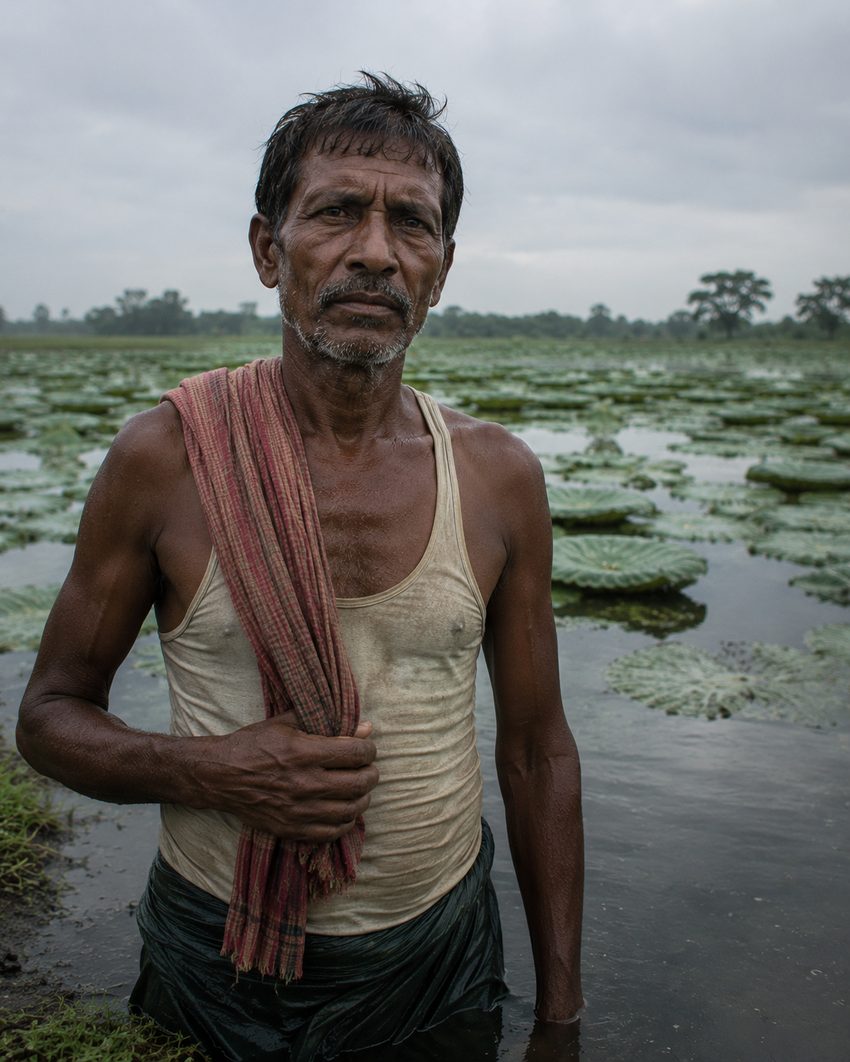
Works four ponds near Kamtaul. Learned to read a pond bed from his father, and can tell you the yield before the first basket is up.
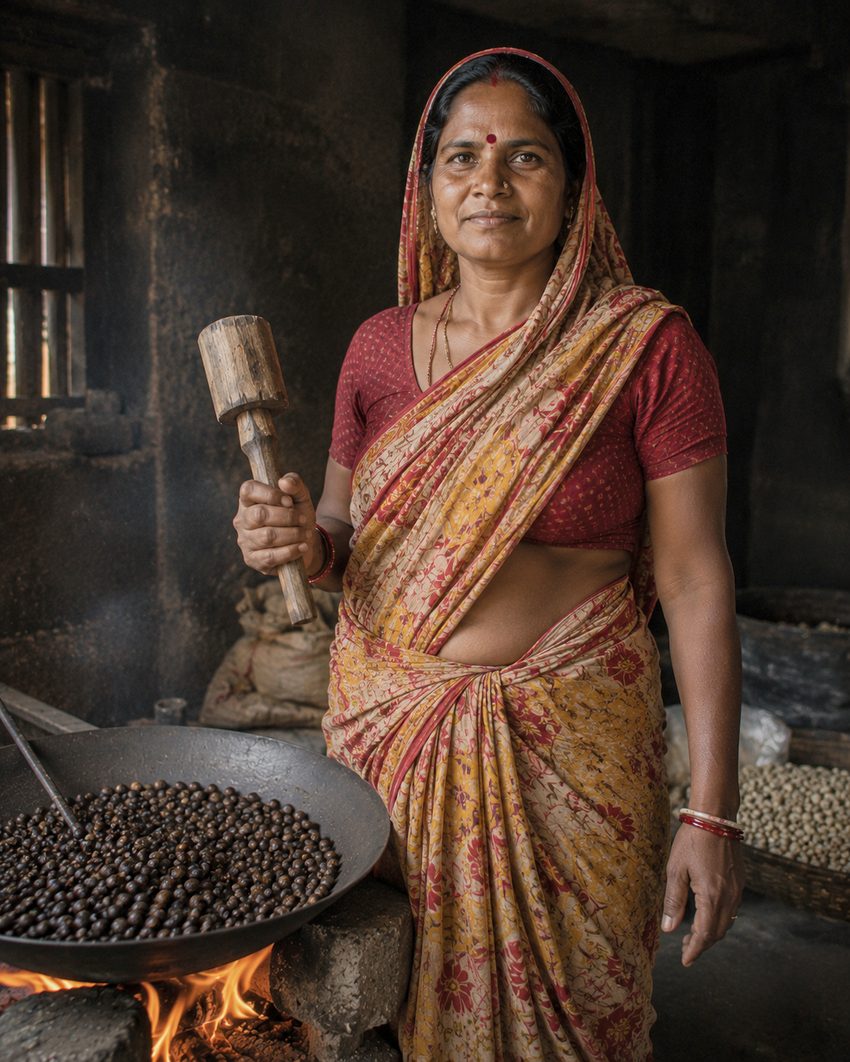
Runs the pan line and settles every argument about timing. Trains new poppers for a full season before they are allowed a mallet.

Keeps the sieve room and the pond stamps. The reason every packet can be traced back to the water it came out of.
Wholesale, private label and export. Tell us the grade and the volume and you will get a rate, a lead time and the ponds it would come from.
तालाब का नाम पूछिए